' fill='%23FBBC05' d='M0 37V11l17 13z'/%3E%3Cpath clip-path='url(%23b)' fill='%23EA4335' d='M0 11l17 13 7-6.1L48 14V0H0z'/%3E%3Cpath clip-path='url(%23b)' fill='%2334A853' d='M0 37l30-23 7.9 1L48 0v48H0z'/%3E%3Cpath clip-path='url(%23b)' fill='%234285F4' d='M48 48L17 24l-4-3 35-10z'/%3E%3C/svg%3E)
At the same time, the investment conversation is no longer one-directional. Romania is increasingly on the radar of UAE-based investors, attracted by EU market access, competitive costs, and emerging opportunities in sectors such as energy, agriculture, and infrastructure.
In this interview, Al Safar & Partners offer a ground-level view of how this bilateral dynamic is evolving—cutting through media noise, addressing investor concerns, and highlighting where the real opportunities and risks lie in 2026.
Which are the main reasons the United Arab Emirates has been such an attractive destination for foreign investors in recent years? Do you have official statistics on the number of Romanian companies investing there? Apart from Real Estate, are there other fields these companies operate in?
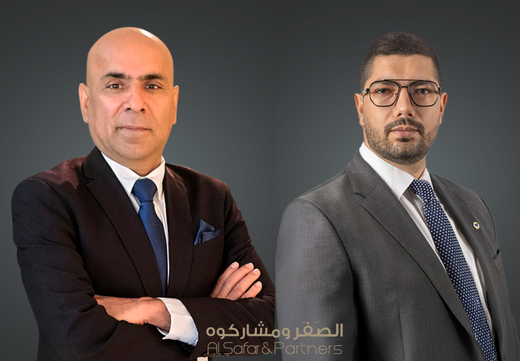
Al Safar & Partners: The UAE has become attractive for a mix of reasons. The tax side is what everyone mentions first, namely, no personal income tax (including no salary tax), no dividends tax, and a corporate tax of 9% on actual profits that exceed AED 375,000 (approximately USD 102,000). But what we think actually sets it apart is the leadership. What they have built here in a timeframe that most countries would consider impossible is remarkable. The speed at which things move, the vision, the execution, it reflects a quality of governance that is genuinely rare. And from what we see in 2025, the appetite from foreign investors has not slowed down at all.
On Romanian companies specifically, there are no centralized official figures, but from what I see in my day to day work, the Romanian business community here has grown quite a lot in recent years, probably more than people back home would expect. While there is no centralized official count, the Romanian community across the UAE is visibly growing: the Romanian Ministry of Foreign Affairs has indicated a figure of around 14,000 Romanian citizens across the entire UAE.
Real estate tends to be the entry point, but it goes well beyond that. We see Romanians active in IT, trading, logistics, aviation, professional services, auto services. The profile has diversified quite significantly, and that is something we can speak to from direct experience in what we do here at Al Safar & Partners.
Which are the first questions the Romanian clients (either individuals or legal entities) ask when they think about investing in the UAE? But from a lawyer’s point of view, which are the first things the clients need to know before deciding to invest?
Al Safar & Partners: The first thing almost everyone asks is about the steps necessary for incorporating a company in the UAE, steps of starting a business and tax matters. Whether it is personal income tax, corporate tax, what applies to them and what does not. It is usually the starting point of every conversation.
Then comes the question of ownership. People have heard about the old rules requiring a local partner and they want to know if that is still the case. The short answer in 2026 is no, 100% foreign ownership is now possible in most sectors, both in Free Zones and on the Mainland. There are specific businesses for which, indeed, you still require a local partner.
After that, banking. How do you open an account, how long does it take, do you need to be physically present. These are very practical concerns and they matter a lot in reality.
From a lawyer’s perspective, before we even get into the legal structure, the first thing we always tell clients is to perform a proper market study with a serious company which provides this service. Understanding whether there is actual demand for your product or your service, who your competition is, the differences between the markets, and whether the numbers make sense, that has to come before any legal decision.
Once these aspects are clear, then there are three things clients really need to understand. The first is the choice between Free Zone and Mainland, because it is not just a tax question, it determines what you can and cannot do commercially and shapes the entire structure of your business here. The second is source of funds, because compliance requirements are serious and clients need to be prepared for that process from day one, not after the fact. And the third, which surprisingly few people think about, is what happens to their assets if something goes wrong, because inheritance law here follows different rules for non-Muslims and without a registered will, your property and company shares may not end up where you intend them to.
Which are the main reasons why companies/individuals from the United Arab Emirates are interested in Romania? Which are the main economical domains the companies that have invested in Romania come from?
Al Safar & Partners: Romania offers something quite specific for investors from this region and other international ones. The EU and Schengen membership is a big part of it because it gives them access to a single market of 450 million people through a jurisdiction that is still relatively affordable compared to Western Europe. The cost base is competitive, the workforce is educated, and the country sits at an interesting geographical crossroads between East and West.
In terms of sectors, agriculture has been a consistent priority and it makes complete sense when you think about it from a food security perspective. Real estate (i.e., land and apartments) and tourism are also interesting sectors for foreign investors, from our discussions.
Energy is another strong area, particularly renewables. Romania has real potential in wind and solar and that aligns well with the diversification strategies of sovereign funds from this region. And then there is infrastructure, ports, logistics, aviation, areas where state-linked entities from the UAE have been quite active globally and Romania is no exception.
Which are, likewise, in the case of citizens from the UAE or of the companies there, the first questions about Romania and which are the first things you feel to inform them about before investing in Romania?
Al Safar & Partners: The first questions are almost always about what EU membership actually means in practice for them, what it unlocks commercially, and then quickly after that, how the tax framework works and how disputes are resolved. A question that comes up more and more is about residency, because investing in Romania, under specific applicable regulations, may open the door to a Romanian residence permit, which may facilitate short-term travel across the Schengen area, subject to applicable immigration rules, and that is something many clients find genuinely valuable beyond the business case itself.
We believe it is important to inform them upfront that Romania currently has an FDI screening regime in place. Depending on the sector and the value of the investment, a notification to the Competition Council may be required, which could impact the overall timeline of the process. Romania’s FDI screening regime was significantly updated in March 2026 (GEO 17/2026), raising the notification threshold to EUR 5 million and expanding the scope of covered sectors. Investors should seek legal advice to assess whether their specific transaction triggers a mandatory filing. And there’s also the legal predictability. The framework is solid and EU-compliant, but inconsistency in how courts and authorities sometimes interpret the law is still something that needs to be factored into how you structure the investment from the very beginning. However, business lawyers play an important role here in delivering the proper explanations to the courts and authorities.
How has evolved in recent years the interest of companies from the United Arab Emirates in investing in Romania?
Al Safar & Partners: The interest has shifted quite a lot. A few years ago it was mostly real estate and some agriculture. What we see now is a much more strategic approach, sovereign funds and state-linked entities looking at energy, infrastructure and technology, with real capital and real timelines behind it. The bilateral relationship at government level has also strengthened considerably, and in our experience when that diplomatic momentum builds, private investment follows pretty quickly.
Are there official statistics on the total value of foreign investments in the UAE in 2025? What about statistics on the evolution of the value of foreign investments in recent years? Are there forecasts about 2026 compared to the recent years in terms of foreign investments attracted, given the geo-strategic context in the Middle East?
Al Safar & Partners: The UAE has seen record-breaking momentum, attracting USD 45.6 billion in Foreign Direct Investment (FDI) in 2024—a 48% increase over the previous year. This growth is part of a steady upward trend, rising from USD 20.7 billion in 2021 to over USD 30 billion in 2023. While final consolidated figures for 2025 are typically released in the second quarter of the following year, interim data shows a 25% jump in new „greenfield” projects, confirming that the country remains a top global destination for capital.
Looking toward 2026, forecasts from the IMF and Central Bank remain highly optimistic, with projected economic growth above 5%. Despite the complex geo-strategic context in the Middle East, the UAE has successfully positioned itself as a „safe haven” and a neutral global hub. Investors are increasingly drawn to its stability, 100% foreign ownership laws, and massive push into AI and renewable energy, which are expected to be the primary drivers of investment in the coming year.
How dynamic was the Real Estate market in Emirates at the beginning of 2026? What are the effects of the situation in recent days on the ongoing real estate projects and on the occupancy rate of the completed projects?
Al Safar & Partners: The UAE real estate market entered 2026 with strong momentum, following a record-breaking 2025 across its key emirates. Dubai recorded over AED 917 billion (approximately USD 250 billion) in real estate transactions, while Abu Dhabi reached AED 142 billion (approximately USD 38.7 billion), highlighting the exceptional level of activity in the market.
At the beginning of 2026, the sector continued to demonstrate solid demand fundamentals, supported by sustained population growth (i.e., over 450 new residents/day), international investor inflows, and long-term residency initiatives such as investor visa programs. However, recent geopolitical tensions in the region have introduced a more cautious, „wait-and-see” approach among certain investor segments. While this has not fundamentally altered market dynamics, it has led to some short-term hesitation, particularly in relation to new investment commitments and off-plan projects.
Despite these factors, the impact on completed real estate assets remains limited. Occupancy levels across prime residential and commercial segments continue to be supported by strong underlying demand, reinforcing the UAE’s position as a stable and attractive destination for both investors and residents.
It is also important to note that the vast majority of long-term residents have shown little concern. Those who have lived and worked in the UAE for many years, built businesses here or established stable careers, know the country well and understand how it operates. For them, the current tensions are not a reason to leave or to panic, as they have seen the UAE navigate difficult regional moments before and come out stronger each time.
Also, those who know the history of the UAE, not just the post-pandemic boom but how this country was actually built, from almost nothing and in a genuinely difficult regional environment, tend to see things differently. That background creates a perspective that is hard to shake. When you understand where this place came from, short term turbulence stops feeling like a threat and starts feeling like noise. The people who have been here the longest are usually the least worried.
Which are the questions the Romanian clients ask you most often in recent weeks? Which are their biggest fears?
Al Safar & Partners: The questions have shifted quite noticeably in recent weeks. Some of the clients who were previously focused on setting up structures, acquiring property or expanding their business in the UAE are now calling first to ask whether they should be worried. That is the most common opening line right now, and it’s quite normal, we would say, given the way international media has been presenting the situation. The headlines have been alarmist and, in many cases, simply disconnected from what is actually happening on the ground. Social media has made things worse, with fake news, AI-generated images and footage from completely different conflicts being shared as if they were happening in the UAE. That is why we always tell clients the same thing: follow only the official UAE government channels, the official communications provided by the UAE Embassy offices in their home countries, and ignore everything else.
In terms of behaviour, some clients put projects on hold initially, others continued without hesitation. What is interesting is that a good part of those who paused have started resuming in the last two weeks, as the situation became clearer. What we have also noticed, and this is a personal observation, is that international clients with businesses across multiple jurisdictions have not been worried at all. They have seen this kind of volatility before and they know how to read it.
And then there is another category entirely, clients who are actively looking to take advantage of this moment, either to acquire real estate at a more favourable entry point or to identify business opportunities that the current context has created.
Our broader view, having lived and worked here, is that the UAE is a far stronger and more resilient country than people who have not experienced it firsthand tend to imagine. From the outside, looking at regional headlines, it is easy to be alarmed. But when you live here and see how things actually move, how decisions are made, how fast the Government responds, you develop a very different perspective. What we always tell people is to follow only the official UAE Government channels and communications. They present the situation accurately, clearly and without sensationalism, and that is the only reliable reference point in moments like this.
Which are the services that you have offered these days, both for individuals and for companies, related to the extraordinary events nowadays?
Al Safar & Partners: The requests we have been receiving reflect both the uncertainty and the opportunity this moment has created.
On the corporate side, company formations and business expansions into the UAE have continued at a steady pace, with some clients actually accelerating their plans. We have also been active on M&A and real estate acquisitions, with buyers looking to negotiate more favourable terms in the current climate.
On the contentious side, we have seen an increase in real estate litigation and contractual breach disputes, where some parties are using the current situation as a pretext to exit commitments. And the topic that has come up more than anything else in recent weeks is force majeure. Clients on both sides of contracts are coming to us to understand whether current circumstances qualify and what that means practically for their obligations.
Which are the main economic effects of these events? What do the officials and economists from Emirates say about the forecasts for the near future?
Al Safar & Partners: The UAE economy has held up well, and the effects of recent regional tensions have been more contained than many outside observers expected. There was short-term volatility in financial markets and a degree of caution among some investors, but no structural disruption has occurred.
Officials consistently point to the same set of fundamentals: a diversified economy where non-oil sectors now represent approximately three-quarters of GDP, a well-capitalised banking system, and a fiscal position with liquid government assets estimated at over 200 percent of GDP. These are not talking points, they are the reason the Central Bank of the UAE, the IMF and the World Bank have all maintained their growth forecasts above 5 percent for 2026 without revision.
From what we see on the ground, projects continue to be built, transactions continue to happen, both from locals and from expatriates who live and work here and know the reality firsthand. Business leaders and economists are cautiously optimistic, acknowledging short-term uncertainty while remaining confident in the underlying trajectory.
The consensus, both official and from independent analysts, is that the UAE is well-positioned to navigate this period without major disruption, and that residents and investors can continue to operate with confidence.
Which of the information appearing in media and social media in Romania does not reflect the reality in the Emirates? What is the real situation regarding these aspects? What are the sources of information that you recommend?
Al Safar & Partners: There is a significant gap between what is circulating on media and social media and what we actually see on the ground. Claims about market collapse, construction stopping, money being blocked or frozen, people leaving en masse, these are not just inaccurate, some are completely false and, we would go as far as saying, deliberately misleading. Transactions are continuing, funds are moving normally, projects are being built, and daily life in Dubai, Abu Dhabi and other Emirates remains normal.
One of the most damaging pieces of misinformation circulating in recent weeks was the claim that banks in the UAE had frozen accounts and blocked access to funds. The UAE Government officially denied this, and beyond the official position, we have direct confirmation from our own clients, banks, business people and investors living and working in the UAE that none of them have experienced anything remotely close to what was being described online.
Much of the alarming content includes AI-generated images and footage from conflicts in completely different parts of the region being presented as events happening in the UAE. It is worth knowing that the UAE has dedicated authorities that actively monitor and sanction the spreading of fake news, backed by concrete legislation, specifically the Cybercrime Law, Federal Decree-Law No. 34 of 2021, which explicitly incriminates the dissemination of false information online. This is, frankly, a completely healthy approach and one that more countries should consider, especially given the times we are living in.
There is also a growing trend of “self-proclaimed specialists” and “influencers” commenting with great confidence on topics they have no real expertise in, driven by reach, visibility or other agendas. Some have never been to the UAE, or spent a week there on holiday, and are now presenting themselves as authorities. People should be aware of that when deciding whose opinion to trust.
Our recommendation is always the same: rely on official UAE Government channels, the Central Bank of the UAE, the Dubai Media Office, and the UAE embassies in Romania and across Europe. For anyone making financial or investment decisions, those are the only references worth taking seriously.
Which are the reasons why you believe the UAE could continue to be a safe market for investments? What risks are now greater than in 2025 and to what extent can a law firm help reducing or eliminating them?
Al Safar & Partners: The UAE remains a safe market for several reasons that have not changed: a robust and business-friendly legal framework, a government that acts decisively and fast in moments of uncertainty, and economic fundamentals that are genuinely resilient. What makes it stand out even more in 2026 is a combination of advantages that few markets can offer simultaneously. It sits at the intersection of three continents, with three billion consumers within a four-hour flight, one of the world’s busiest airports and largest ports. Full foreign ownership is available across most sectors, long-term residency through the Golden Visa provides real stability, and the business setup process is largely digital. The UAE has concluded over 30 Comprehensive Economic Partnership Agreements and counting, giving businesses here preferential access to markets across Asia, Africa and Europe, a network that continues to expand.
The risks that have increased compared to 2025 are geopolitical unpredictability in the broader region, cost adjustments in ongoing construction and development projects, and the volume of misinformation affecting investor sentiment. The volume of exaggerated or conflicting information circulating internationally has not helped either, affecting sentiment more than the actual fundamentals warrant. But in practice, none of this has disrupted the market in any meaningful way. While these dynamics have created a more selective environment, experienced investors know that this is precisely when the best opportunities tend to appear.
From a legal perspective, UAE law provides strong contractual protections, and well-structured agreements with proper force majeure clauses and dispute resolution mechanisms can significantly reduce exposure. The arbitration centres, DIAC and ADGM, are sophisticated and efficient, and the regulatory frameworks for real estate under RERA offer protections that many other markets simply do not have.
Where we as business lawyers add the most value right now is in reviewing existing contracts for vulnerability, advising on force majeure applicability, and structuring new transactions with the current risk environment in mind.
In Romania, we have recently had many legislative and fiscal changes that affect the companies. What is the situation in the United Arab Emirates from this point of view: does the law change as often as in Romania or do new regulations appear as often as in Romania? Or, on the contrary, is there more stability? What new regulations have entered into force or will enter into force in 2026 and what impact will they have on foreign economic agents?
Al Safar & Partners: In the UAE, reforms are announced well in advance, go through proper consultation, and are implemented in an orderly way. For a business trying to plan two or three years ahead, that predictability is worth a lot.
In terms of what is new, the UAE introduced a Domestic Minimum Top-up Tax aligned with the OECD Pillar Two framework, applying a 15 percent minimum effective tax rate on large multinationals with revenues above 750 million euros, effective January 2025.
On e-invoicing, this is something Romanian companies will find very familiar. The UAE is introducing a pilot programme starting July 2026, and mandatory compliance for large businesses from January 2027. Romanian operators in the UAE will actually find themselves ahead of the curve on this one.
The overall direction is consistent: the UAE continues to align with international standards while maintaining one of the most competitive and stable fiscal environments in the world.
Which were the most dynamic economic sectors in the UAE in 2025 and in the beginning of 2026?
Al Safar & Partners: 2025 and early 2026 saw broad economic strength across multiple sectors. Real estate remained the standout, with Dubai recording over AED 917 billion in transactions in 2025, and transaction volumes growing approximately 20 percent year on year in the first two months of 2026. Tourism, financial services, logistics and technology all performed strongly, with overall GDP growth at around 5.6% for 2025.
Going into 2026, the picture remains positive despite the geopolitical context. The Central Bank projects GDP growth of 5.2 percent for the full year, and the sectors that drove 2025 are all entering 2026 with solid fundamentals. If the current regional tensions de-escalate, which is what most analysts and official sources are pointing towards, the market is well positioned to accelerate again in the second half of 2026. The UAE has navigated this kind of uncertainty before and come out stronger each time, and there is no structural reason to expect a different outcome now.
Which are the main cultural differences, communicational differences or differences related to legal practice compared to Romania that you adapted to the easiest and which, on the contrary, are the ones that you, perhaps, have adapted to more difficult?
Al Safar & Partners: The easiest adaptation was the pace. In the UAE, things move fast. A company can be set up in days, decisions are made quickly, and the government actively competes for your business. That energy suits us well as professionals.
What took more adjustment was the communication style. In the UAE, communication is more indirect and relationship-driven. Reading between the lines becomes an essential professional skill, and that is a genuine shift from the more direct European approach.
From a legal perspective, the biggest difference is the complexity of the system itself. In Romania you operate within one unified legal framework. In the UAE it is fundamentally different. You have the mainland governed by UAE federal law, and then more than 40 free zones, each with its own regulatory framework, licensing requirements and permitted activities. On top of that, you have multiple court systems operating in parallel: the Dubai Courts and Abu Dhabi Courts applying civil law, the DIFC Courts in Dubai and the ADGM Courts in Abu Dhabi operating as fully independent common law jurisdictions with English as the language of proceedings. For dispute resolution, the main arbitration centres are DIAC in Dubai and arbitrateAD in Abu Dhabi, both of which are sophisticated institutions aligned with international best practices.
Before you can even begin to advise a client, you need to establish which system applies to their situation. It is intellectually demanding, but once you understand the architecture, it actually gives clients enormous flexibility in how they structure their affairs.
In Europe, some current topics are sustainability and digitalization/use of AI. In the United Arab Emirates, which are the topics of the moment?
Al Safar & Partners: The topics shaping the UAE right now go well beyond what Europe is discussing. AI is without question the defining priority, and the scale of the commitment is extraordinary. The UAE has invested 148 billion dollars in AI domestically and abroad since 2024, according to the Minister of State for AI. The Stargate project, a one gigawatt AI data centre campus in Abu Dhabi built in partnership with OpenAI, G42, Microsoft, Oracle and Nvidia, is the most visible expression of that ambition, with the first phase expected to launch in 2026. The UAE was also the first country in the world to appoint a Minister of State for Artificial Intelligence, which tells you how seriously this is taken at the highest level of government.
Cybersecurity is closely linked to that agenda, with the UAE integrating AI and cybersecurity into a single national strategy, recognising that one cannot advance without the other. Sustainability is also on the table, but framed around practical industrial decarbonisation and renewable energy rather than regulatory compliance.
And then there is the broader digital economy push. The UAE’s Digital Economy Strategy targets doubling the digital economy’s contribution to GDP from 9.7 percent in 2022 to 19.4 percent within 10 years (by 2032), with fintech, cloud infrastructure, smart cities and data centres all central to that agenda. The ambition is explicit: the UAE wants to become the world’s leading AI-native nation, and the investments being made suggest this is not just rhetoric.
Do you collaborate with authorities or organizations in Romania and in the UAE to promote investments? How do you cooperate with them specifically – organizing events for business people, providing official information, statistics, etc.?
Al Safar & Partners: Yes, and this is something we invest in very deliberately as a long-term commitment to building a genuine bridge between the two business communities.
In May 2025, the Romania-UAE Business Forum was organised in Ploiesti together with the Prahova Chamber of Commerce and Industry and the UAE Embassy in Romania, where Al Safar and Partners and PGC Partners presented the legal and fiscal framework available for Romanian companies looking to expand into the UAE, as well as the mechanisms for attracting UAE investment into Romania.
On 30 September 2025, the UAE Embassy in Romania and the Brasov Chamber of Commerce and Industry jointly organised the Romania-UAE Business Forum in Brasov, where we participated actively, providing practical information on company expansion into the UAE, strategic partnerships and joint ventures. The event brought together businesses from across Romania, including Cluj, Bucharest, Constanta, Prahova and Valcea, confirming that the interest is national, not just regional.
In November 2025, we signed a formal cooperation protocol with the Brasov Chamber of Commerce and Industry, establishing a concrete framework for attracting investments, promoting UAE opportunities in Romania, and developing bilateral projects across tourism, hospitality, real estate, manufacturing, renewable energy and infrastructure.
In February 2026, we were part of the Romania-UAE Business Summit in Cluj-Napoca, as strategic partner and sponsor, which brought together over 170 entrepreneurs and investors from both countries across multiple sectors.
How do you see the United Arab Emirates (and Dubai in particular) evolving over the next few years? What major projects are currently in the pipeline, and what legislative or regulatory changes are expected to reshape the investment landscape?
Al Safar & Partners: The UAE and Dubai are not just planning the future. They are building it, right now, at a scale that is hard to find anywhere else in the world.
Dubai 2040 Urban Master Plan sets the tone: population expected to nearly double to 7.8 million, with massive expansions in green spaces, beaches, healthcare, and education infrastructure across five distinct urban centres.
Dubai Green Spine will transform a 40-mile corridor into a living urban forest with one million trees, elevated walkways, cycling paths, urban farms, and a solar-powered electric tram — reducing CO2 emissions by over one million tonnes annually.
Dubai Loop, following an agreement signed with The Boring Company earlier this year, the project will create an underground passenger network stretching 22 kilometres with 19 stations. Tunnelling starts in the second half of 2026.
Al Maktoum International Airport is being built as we speak into the largest airport on the planet — five runways, 400 gates, 260 million passengers annually.
Palm Jebel Ali, twice the size of Palm Jumeirah, delivers first residences in late 2026 alongside 80 hotels and resorts.
Air taxis are expected to launch commercially in 2026, with the RTA targeting service by year-end, connecting the airport, Marina, Palm Jumeirah and Downtown — electric, 320 km/h, four passengers.
Dubai Reef becomes the world’s largest marine development — 600 square kilometres of artificial coral structures along the coastline.
For investors and businesses deciding where to position themselves for the next decade, the signal is clear: this is a city that does not just announce projects, it builds them.
Un material Legal Marketing